
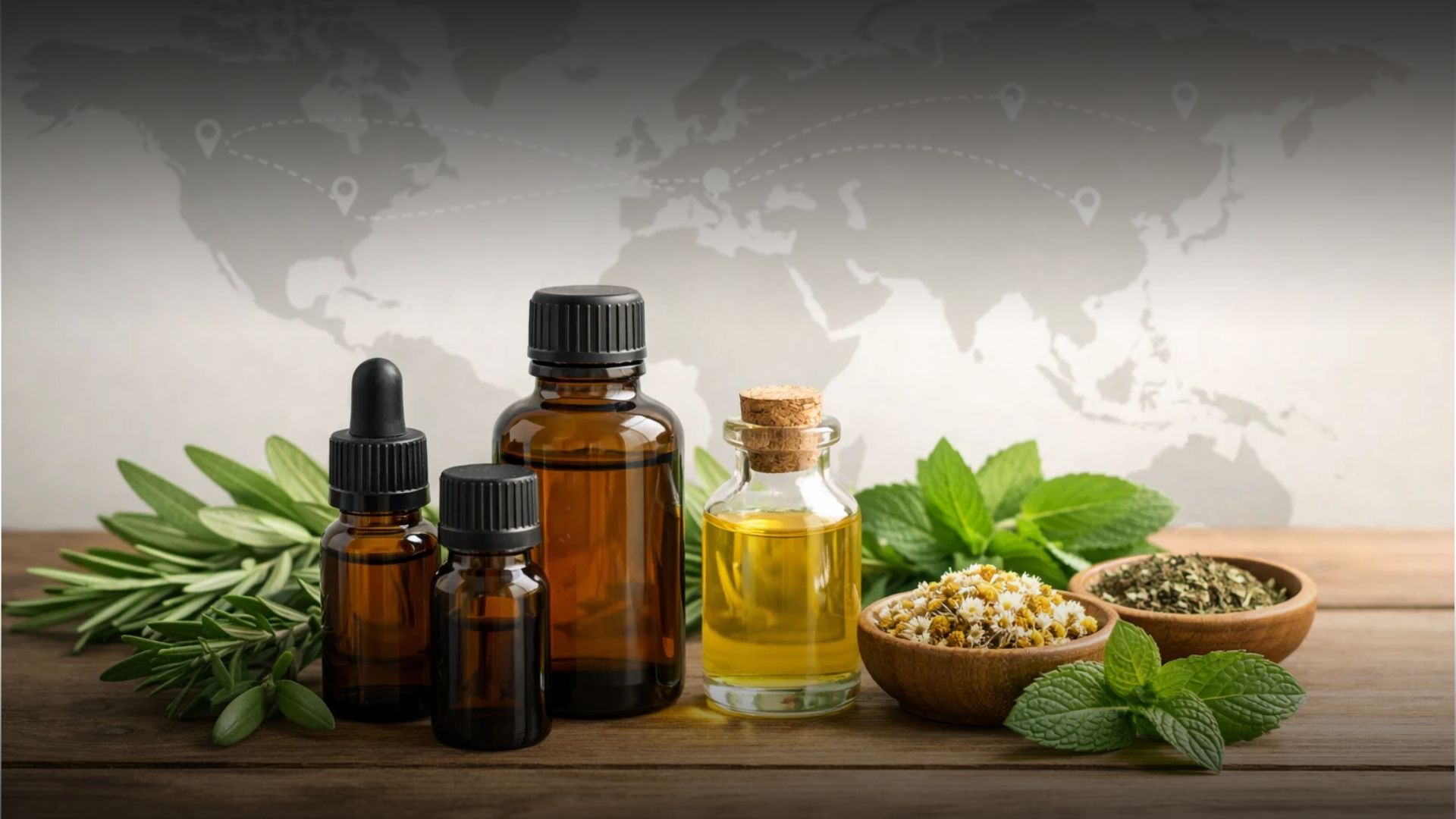
Essential oils are concentrated aromatic substances obtained from different parts of plants, including flowers, leaves, roots, bark, seeds, and peels. Known for their distinctive fragrances and characteristic properties, essential oils are widely used across several industries, including cosmetics, personal care, perfumery, aromatherapy, and household products.
With increasing interest in botanical ingredients and plant-derived fragrances, essential oils have become important raw materials for manufacturers looking to develop innovative products for modern consumers.
How Essential Oils Are Obtained
Essential oils are generally extracted using methods such as steam distillation, cold pressing, and other suitable extraction techniques. The method depends on the plant material and the characteristics of the desired oil.
Proper extraction, handling, storage, and quality evaluation are important for maintaining the aroma profile and consistency of essential oils. Factors such as botanical origin, harvesting conditions, and processing methods can influence the final product.
Applications of Essential Oils Across Industries
Essential oils have a wide range of industrial applications. In the fragrance industry, they are used to create distinctive aromatic compositions for perfumes and scented products. Cosmetic and personal care manufacturers incorporate selected essential oils into formulations such as soaps, shampoos, creams, and body care products.
Essential oils are also used in home fragrance products, air fresheners, candles, and selected wellness-related formulations. Their suitability depends on the specific oil, formulation requirements, intended use, and applicable safety standards.
Importance of Quality and Consistency
For manufacturers, consistent quality is essential when sourcing essential oils. Variations in aroma, composition, purity, and physical characteristics can affect the performance and consistency of finished products.
Reliable sourcing, appropriate quality testing, and clear product specifications help businesses maintain manufacturing standards. Buyers should consider factors such as botanical identification, relevant analytical documentation, packaging, and storage conditions when selecting suppliers.
Choosing the Right Essential Oil Supplier
Selecting a dependable essential oil supplier is an important part of building a successful manufacturing process. Businesses should evaluate product quality, supply capabilities, documentation, communication, and consistency before establishing long-term sourcing relationships.
Shri Bhagat Arochem Private Limited offers a range of essential oils and aromatic ingredients for businesses seeking quality-focused ingredient sourcing. With an emphasis on reliability, product knowledge, and customer satisfaction, the company aims to support the requirements of domestic and international customers.
Conclusion
Essential oils continue to play an important role in fragrance, cosmetic, personal care, and related industries. Understanding their extraction, applications, and quality requirements helps manufacturers make informed sourcing decisions and develop products that meet their customers' expectations.